
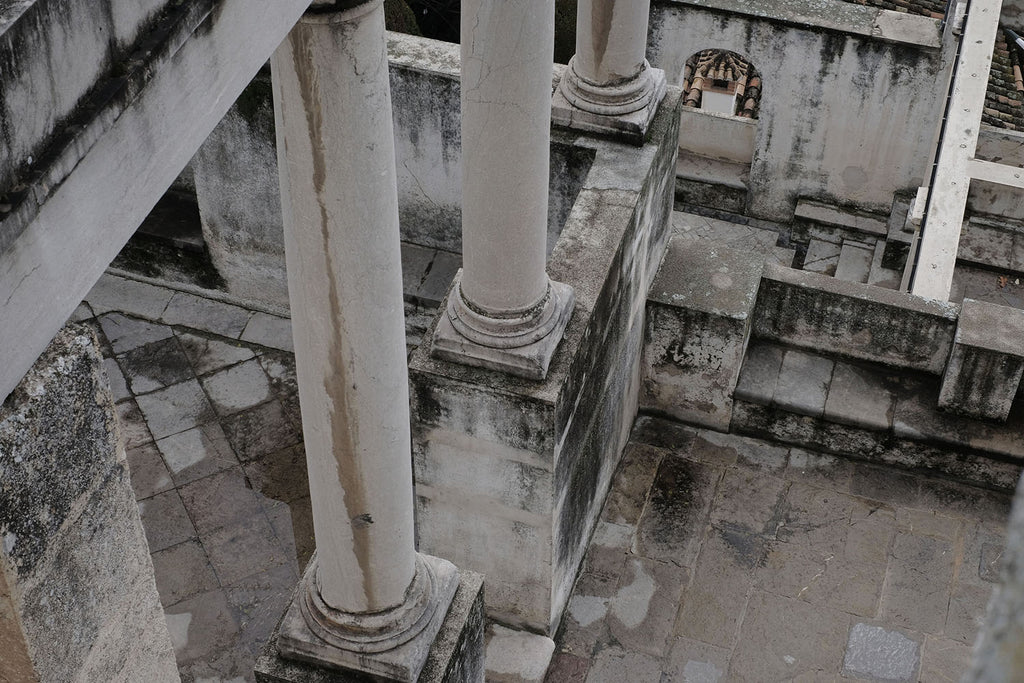
Si hay un sitio donde puedes sentir que estás dentro de un cuadro de Escher, sin duda es en el Carmen de la Fundación Rodríguez Acosta, en Granada. Y es que esas imágenes en blanco y negro de laberínticas escaleras imposibles comunicadas entre sí, que conducen a estancias con amplias arcadas, parecen hacerse realidad en este lugar. Quizás tenga que ver con que en la visita de Escher a la Alhambra en 1936, parara a contemplar este espacio, o quizás sea sólo una casualidad que dado el parecido, relacionamos con facilidad.
Pero en lo que hoy queremos centrarnos es en qué transmite este carmen, porque si la subida caminando a la Alhambra es un maravilloso paseo repleto de colores y paisajes, donde vegetación y construcción se entrelazan mientras vas dejando atrás y abajo la ciudad, visible desde cualquier punto del recorrido, hacer una parada en este espacio, creo que impacta emocionalmente a cualquiera.

Como punto de partida, cuando hablamos de un carmen, estamos haciendo referencia a una casa tradicional granadina tapiada al exterior y siempre acompañada por un jardín y un huerto.
En este caso, el carmen fue construido por el pintor granadino José María Rodríguez Acosta, que desde 1913 hasta 1930, decidió abandonar la pintura para dedicarse a la construcción de este espacio que usaría como estudio-taller personal.
El resultado fue este lugar cargado de magia y misterio, laberíntico, art decó, cubista, clásico e islámico al mismo tiempo, que funde la tradición local con diversas estéticas traídas de sus viajes a Europa, Oriente y América.

Un espacio en blanco, negro y verde, donde todo conserva su pátina y es precisamente la propia pátina la que unifica un conjunto, que lejos de envolverte en un pastiche, encaja las diversas estéticas para completar la esencia de una atmósfera con carácter propio. Un espacio cargado de detalles, de matices, en el que cada una de las perspectivas han sido compuestas como si de un cuadro se tratara.
Cuando visitamos casas museizadas, me gusta sentarme, parar, perderme del recorrido e intentar comportarme como creo que lo haría la persona que vivía allí y no entender el conjunto con el carácter de posterior “obra de arte” con el que se visita hoy, sino como un espacio donde un día se vivió y que fue creado por su dueño para adaptarse a su particular modo de vida.
En este caso, los lugares que pudimos recorrer, se me antojan espacios pensados para tan sólo sentarse y mirar. O para mirar y recorrer, quizás más solo que acompañado. Espacios contemplativos. Para mirar hoy desde aquí y mañana desde ahí. Mirar Granada a través de diferentes marcos.

Pero también, para disfrutar de los propios escenarios que encierran sus muros, que sin duda, son un alarde sensorial, donde es fácil verse envuelto por el sonido del agua que corre, el cambio de la temperatura según el ambiente, el olor fresco de los setos y el deleite visual desde cualquier rincón hacia donde se mire.
Es curioso cómo un mismo espacio puede trasladar simultáneamente a tantas otras épocas y lugares lejanos y sin embargo, preservar su armonía e identidad.

Leave a comment